
✦ Arizona assisted living buyer guide
Buying an Assisted Living Business in Arizona
An Arizona assisted living acquisition may include the operating business, the real estate, or both. Understand what you are buying, how the business earns its income, and what needs to happen before you can operate.
Looking for an assisted living business for sale in Arizona? Share your preferred locations, budget and target facility size through our Buyer Network. This guide does not display verified live inventory. Opportunities depend on availability, seller requirements and buyer qualification.
Can You Buy an Assisted Living Business Without the Real Estate?
Yes—if the seller offers a business-only acquisition and you secure an acceptable lease for the property. Before committing, evaluate earnings after your actual rent and operating expenses, confirm landlord consent and financing requirements, and determine the Arizona licensing steps that apply to your transaction.
A lower business-only asking price does not necessarily mean a lower total cost. Compare the purchase price, rent, future increases, repairs and operating reserves with the financing costs, property expenses and capital needs of owning the real estate.
Business only or business and real estate
|
Consideration |
Business only |
Business and real estate |
|---|---|---|
|
Property rights |
Established through a lease |
Established through the property acquisition |
|
Occupancy costs |
Rent and expenses allocated by the lease |
Debt service if financed, taxes, insurance and property upkeep |
|
Key review |
Lease duration, renewals, assignment and landlord consent |
Title, property condition, financing and ownership structure |
|
Licensing |
Confirm the requirements for the proposed transaction |
Confirm the requirements for the proposed transaction |
What Can an Assisted Living Business Purchase Include?
An asset purchase may include agreed furniture, equipment, the business name, website and assignable contracts. Records require separate attention to privacy, retention and authorized access. An ownership-interest purchase acquires an interest in the entity and can carry different liability and tax consequences.
Have counsel identify the assets and obligations included, required consents, treatment of resident deposits, and responsibility for liabilities. Residents have rights and choices; they are not purchased assets. Employees, vendor accounts and referral relationships should not be assumed to remain unchanged.
The facility license is not an assignable business asset. Arizona law prohibits transferring or assigning the license and makes it specific to the premises. Read Arizona facility license restrictions.
What Lease Terms Matter for a Business Only Acquisition?
Review the initial term, buyer-controlled renewal options, rent increases, permitted use, assignment and landlord consent. Confirm who pays property taxes, insurance, routine maintenance and major repairs, including heating and cooling systems.
Address default remedies, casualty, condemnation and what happens if the property is sold. Ask counsel about nondisturbance and other protections where relevant.
If you plan to use SBA financing, have the lender review the proposed lease before you commit. Confirm the required lease term, renewal options, assignment rights, landlord consents and any lender protections. Requirements depend on the applicable SBA rules, loan structure and lender review.
How Should You Evaluate Earnings and the Asking Price?
Review historical profit-and-loss statements, tax returns, monthly occupancy, resident charges, actual collections, payroll, payer mix and material contracts. Reconcile reported revenue with supporting records through an appropriately authorized due diligence process.
For a business-only purchase, reflect the rent and occupancy expenses you will actually incur. Seller-reported results may omit rent when the same people own the business and the property. Include reasonable compensation to replace any management or caregiving duties performed by the seller.
For a combined acquisition, review the business and property cash flow together. If their values are estimated separately, use a consistent occupancy-cost allocation to avoid counting the same income twice.
Budget for closing costs, working capital, transition expenses and anticipated improvements in addition to the purchase price. Licensed capacity alone does not establish profitability or business value.
What Happens to Arizona Licensing and ALTCS Participation?
Confirm the proposed asset or entity transaction with the Arizona Department of Health Services before setting closing and operating dates. A purchase agreement does not replace the authorization needed to operate. The steps depend on the proposed ownership structure and facility circumstances. Review A.R.S. 36-407 and the ADHS residential facility licensing resources.
If the business serves Arizona Long Term Care System (ALTCS) members, separately review AHCCCS enrollment, applicable health-plan agreements, authorizations, payment terms and ownership-change obligations. Facility licensing alone does not settle payer participation. For homes, start with the AHCCCS assisted living home provider requirements; confirm the applicable requirements for other facility classifications.
How Location Affects an Arizona Assisted Living Acquisition
Evaluate each business within its local service area. Compare actual resident collections, staffing costs, competing facilities and documented sources of resident inquiries. A city name or bed count alone does not establish demand, profitability or value.
Greater Phoenix and Maricopa County
For opportunities in Phoenix, Scottsdale, Mesa, Chandler, Gilbert, Glendale, Peoria and Surprise, review the surrounding neighborhood and the practical area from which the business draws residents and employees. Use property-specific financial and operating records to test the seller’s assumptions.
Tucson and Pima County
Evaluate Tucson-area acquisitions using local staffing, competition, collections and referral evidence. Do not assume that Phoenix-area rates or operating costs apply to a Pima County business.
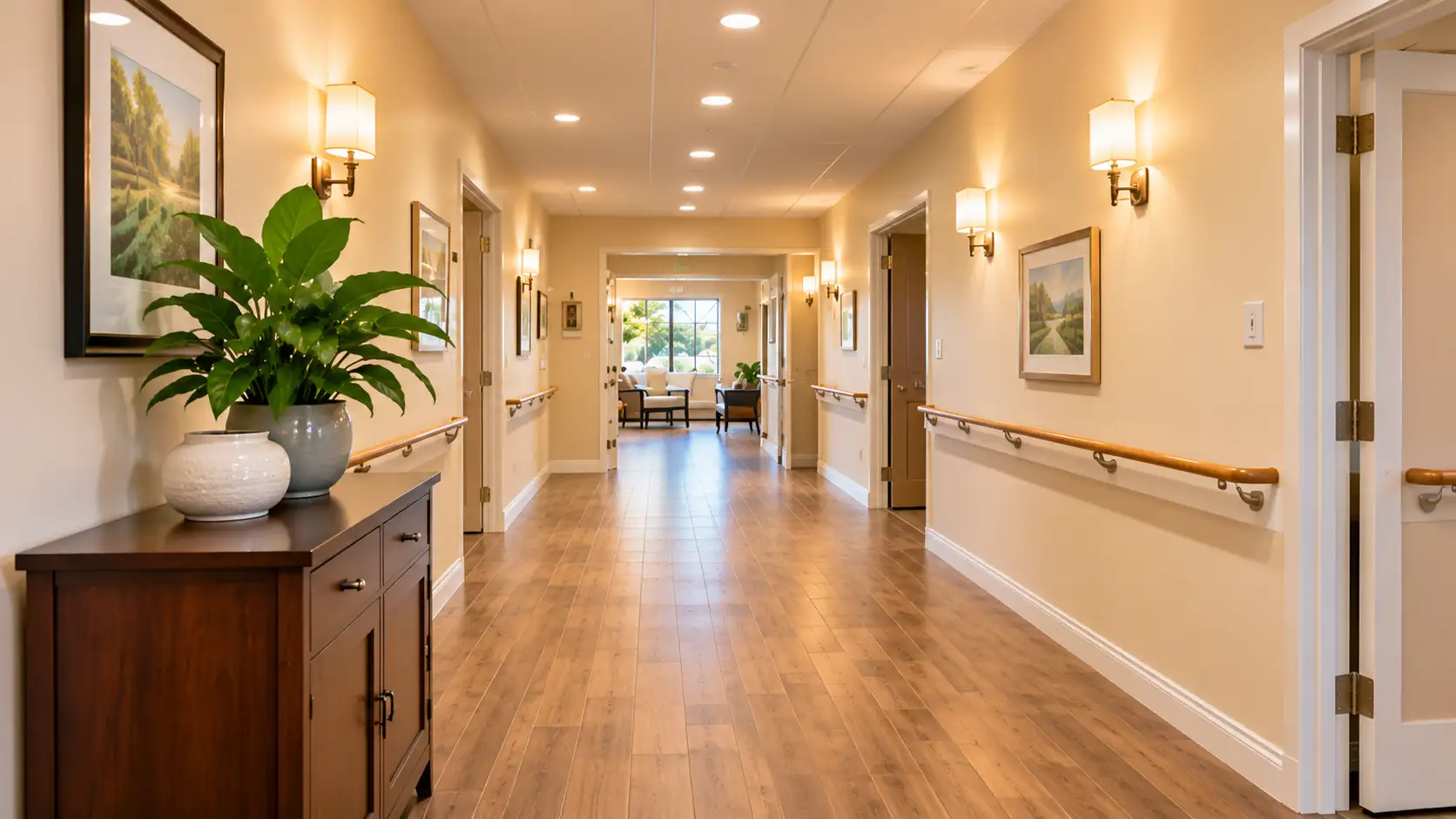
Property photograph from Own Arizona Assisted Living. Shown for illustration; availability, licensing and suitability are not implied.
Pinal County and Other Arizona Markets
Apply the same review in Pinal County, Prescott, Prescott Valley, Flagstaff and other Arizona locations. Confirm the parcel’s actual city, town or unincorporated county jurisdiction, utility arrangements and practical access for residents, staff and emergency services.
Confirm the Licensed Facility Type
Arizona distinguishes assisted living homes serving ten or fewer residents from assisted living centers serving eleven or more. Verify licensed capacity, authorized services and compliance history rather than relying solely on a listing’s description. See Arizona assisted living definitions.
Review Property Requirements Under Current Arizona Law
Arizona law limits certain city and county occupancy and zoning restrictions affecting assisted living homes, including specified restrictions involving homes serving ten or fewer residents on residentially zoned property. Applicable building, fire, safety, health and permitted spacing requirements still need review. Confirm how the current statutes apply to the property and proposed operation. Read the municipal requirements in A.R.S. 9-462.15 and county requirements in A.R.S. 11-820.05.
Plan the Ownership Transition Before Closing
Develop a transition plan covering the manager, caregivers, resident communications, deposits, records, operating accounts, vendor arrangements and working capital. Coordinate financial, licensing, property and financing reviews with the deadlines in your purchase agreement.
The price should reflect supportable performance and the rights being acquired. Do not assume that every resident, employee or referral source will remain after the sale.
✦ FAQ
Arizona Assisted Living Business Purchase FAQs
Can SBA financing fund a business-only acquisition?
Potentially. SBA 7(a) loans may support eligible changes of ownership. Approval depends on the business, buyer, transaction and lender review, including the lease and ability to repay. Learn about SBA 7(a) financing.
Does the seller’s facility license automatically transfer?
No. Arizona law prohibits assigning or transferring the license. Ask ADHS which steps apply to the proposed transaction and ownership structure before establishing closing and operating dates.
What financial records should I request?
Request historical financial statements, tax returns, monthly occupancy, resident revenue and collection detail, payroll, payer mix and material contracts. Arrange access subject to confidentiality, seller approval and appropriate protections for resident and employee information.
Is a right of first refusal the same as an option to buy the property?
No. These arrangements can have different triggers, pricing mechanisms and enforceability considerations. Neither is automatic. Have counsel explain the actual rights and what happens if the property is sold or foreclosed upon.
Where can I find current Arizona assisted living acquisition opportunities?
Public offerings may appear on business-sale platforms, commercial real estate marketplaces and brokerage websites. Some opportunities are marketed confidentially. Verify availability directly and share your criteria through our Buyer Network; access depends on availability, seller requirements and buyer qualification.
✦ Your Arizona acquisition
Discuss your Arizona acquisition plans
Share your preferred Arizona locations, budget, target facility size, operating experience and purchase timeline. If you are evaluating an opportunity, include a public listing link or general description so we can discuss relevant next steps.
An inquiry does not create representation or guarantee access to an offering. Use an agreed secure channel for sensitive financial, resident or employee documents.
Continue your research
- Arizona assisted living buyer guidance
- Arizona assisted living due diligence checklist
- Arizona facility licensing guide
- Assisted living financing overview
Reviewed November 22, 2026. Requirements can change. Confirm the requirements applicable to your transaction with the relevant agencies, lender and qualified professionals. This guide provides general acquisition education and is not a loan commitment, appraisal, legal opinion or facility license.