
✦ Arizona assisted living ownership guide
Residential Assisted Living in Arizona
Residential assisted living usually describes care provided in a smaller, home-like setting. For Arizona buyers and prospective owners, the important questions are how the facility is licensed, which services it may provide and whether the property and operating plan fit the residents it will serve.
This guide explains the Arizona terminology, property considerations and choice between buying an operating home and converting a property. It is written for people exploring ownership and acquisition.
What Is Residential Assisted Living in Arizona?
“Residential assisted living,” often shortened to RAL, is a descriptive term rather than a separate Arizona facility license. Arizona defines an assisted living home as serving ten or fewer residents and an assisted living center as serving eleven or more. Read Arizona’s assisted living definitions.
A home’s actual licensed capacity and authorized services matter more than the marketing label. Do not assume that a house has approval for ten residents simply because it is advertised as a residential assisted living opportunity.
Arizona assisted living terms at a glance
|
Term |
What to understand |
|---|---|
|
Residential assisted living or RAL |
A description of the setting or ownership model, not a separate facility license. |
|
Assisted living home |
The Arizona classification for ten or fewer residents. |
|
Assisted living center |
The Arizona classification for eleven or more residents. |
|
Memory care |
A service description that requires review of the applicable care authorization and operating requirements. |
How Does a Residential Home Differ From a Larger Community?
A residential home typically operates in a domestic setting with fewer residents. A larger community may offer apartments, more amenities and a broader management structure. Layout, services and staffing differ by facility.
Size alone does not establish care quality, resident suitability or profitability. Evaluate the specific operation, the services it is authorized to provide and its ability to meet resident needs. A small setting still involves substantial staffing, safety and management responsibilities.
What Care Services Can an Arizona Assisted Living Home Provide?
Arizona distinguishes supervisory, personal and directed care. In broad terms, supervisory care involves ongoing oversight; personal care includes assistance with daily activities; directed care addresses residents unable to recognize danger, summon help, express needs or make basic care decisions. Review the statutory service definitions.
Verify the facility’s authorized services and applicable operating requirements. Care descriptions on a listing are not a substitute for reviewing the license and resident needs with qualified professionals. Arizona law limits operation and advertising to authorized services and capacity.
Is Residential Assisted Living the Same as Memory Care or a Group Home?
No. “Residential” describes a setting; it does not automatically establish memory-care capability. Arizona’s assisted living rules include specific memory-care requirements in R9-10-816. Review the applicable authorization, training, staffing and service planning before relying on a memory-care claim. See Article 8 of Arizona’s health care institution rules.
If the rules PDF does not open, use the ADHS residential facility licensing resources to locate current rules or contact the licensing team.
“Group home” is a broad term used for different populations and regulatory systems. Identify the actual licensed use of the property. Do not treat assisted living, behavioral health services, developmental-disability services and other residential programs as interchangeable.
Does Owning the Property Qualify You to Operate the Home?
No. Real estate ownership does not replace facility licensing, qualified management or operating requirements. Confirm the facility licensing process with the Arizona Department of Health Services (ADHS) and manager-certification requirements with the Arizona Board of Examiners of Nursing Care Institution Administrators and Assisted Living Facility Managers, commonly called the NCIA Board.
The owner’s role and the manager’s role may differ. If you intend to manage the operation yourself, verify your qualifications before making that commitment. Arizona law requires the applicable current license or certificate for managing, directing and controlling facility operations.
If you buy an existing business, do not assume the seller’s facility license can be assigned to you. Confirm how the transaction and proposed ownership structure affect licensing before setting closing and operating dates. Review Arizona facility license restrictions.
Can Any House Become an Assisted Living Home in Arizona?
No. Before committing to a conversion, investigate the proposed capacity, room layout, bathrooms, accessibility, emergency access, building condition, heating and cooling systems and site constraints. Obtain property-specific advice from the appropriate design, construction, fire-safety and licensing professionals.
Arizona law limits certain municipal and county restrictions on assisted living homes in residential areas. These protections do not issue a facility license or eliminate all applicable building, fire, safety, health or permitted spacing requirements. Confirm the lawful process for the actual parcel and proposed use. Read the municipal assisted living home provisions and county assisted living home provisions.
Ask for a realistic scope of work and approval path before assuming a renovation budget or opening date. A property’s bedroom count or former use does not establish current operating approval.
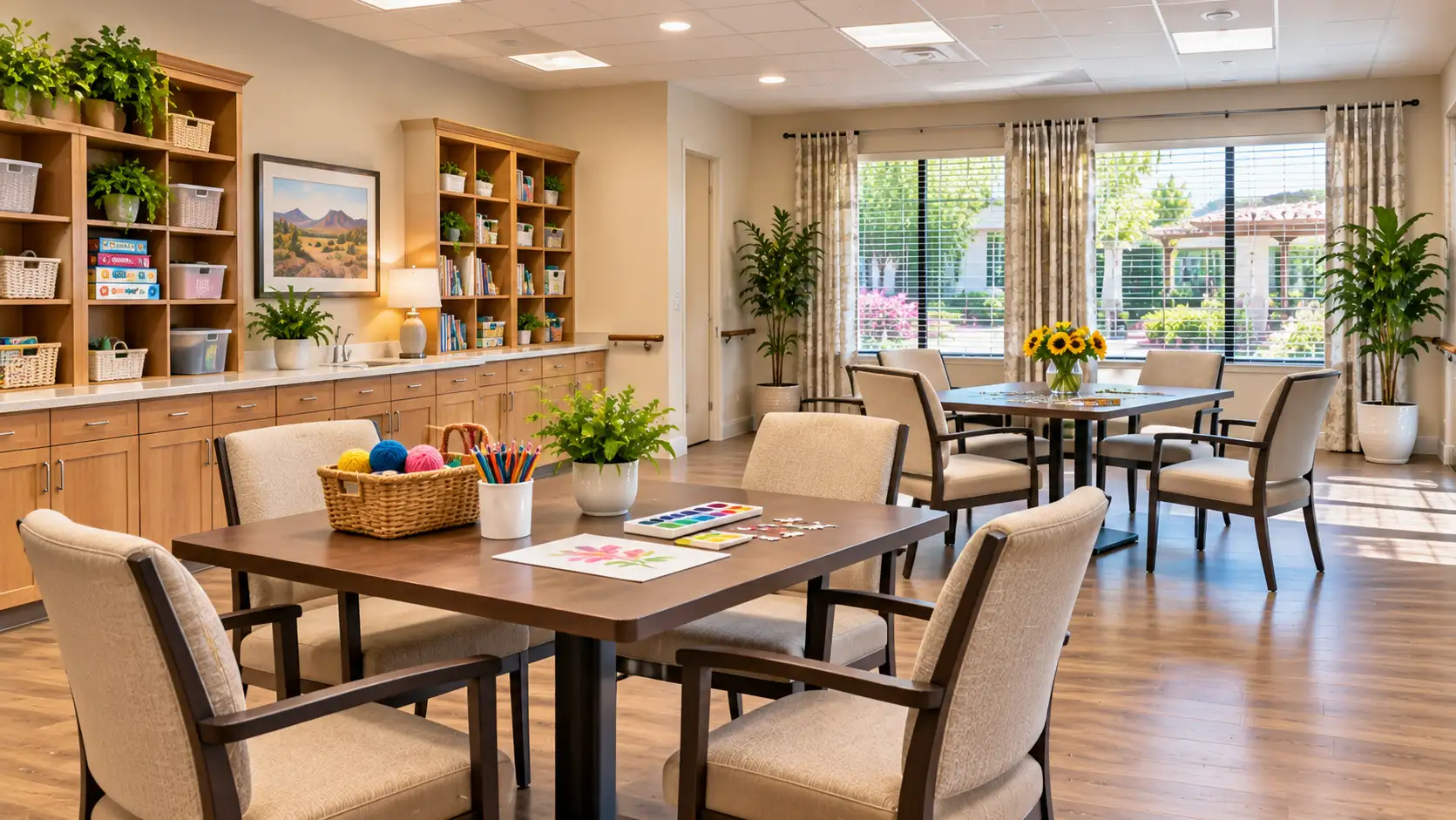
Property photograph from Own Arizona Assisted Living. Shown for illustration; availability, licensing and suitability are not implied.
Should You Buy an Operating Home or Convert a Property?
An operating home may provide financial records, occupancy history and an existing team to evaluate. It may also have losses, deferred maintenance, compliance issues or transition costs. A purchase does not guarantee that residents, employees or referral relationships will remain.
A conversion lets you develop a new operating plan, but improvements, approvals, staffing and resident move-ins can take time. Revenue may begin later than expected.
Compare total capital needs through opening and a realistic stabilization period. Include acquisition costs, professional fees, improvements, furnishings, licensing, financing, payroll, marketing and operating reserves. Neither approach is automatically cheaper or more suitable for a first-time owner.
Use the Arizona assisted living due diligence checklist to organize your review.
Where Does Arizona Geography Affect the Ownership Decision?
Evaluate a home within its actual neighborhood and service area. Compare local competition, documented resident inquiries, staffing availability, actual collections and access for families. Avoid applying one city’s assumptions to every Arizona market.
Greater Phoenix and the Valley
For Phoenix, Scottsdale, Mesa, Chandler, Gilbert and West Valley locations such as Glendale, Peoria and Surprise, examine the nearby labor pool and the practical area from which the home attracts residents. Review the property’s layout, access and operating history alongside its location.
Tucson and Southern Arizona
Use Tucson-area and other Southern Arizona evidence for staffing, competition and resident rates. Review family access, cooling-system condition, shaded outdoor areas and ongoing maintenance as part of the property assessment.
Queen Creek and Pinal County Locations
For opportunities around Queen Creek or in Pinal County, verify the parcel’s actual city, town or unincorporated county jurisdiction. Check utility and service arrangements, local staffing and emergency access. A mailing address alone does not identify every governing authority.
Prescott and Flagstaff Areas
Evaluate Prescott, Prescott Valley and Flagstaff opportunities using local operating evidence. Include seasonal property needs, heating and cooling systems, staff access and emergency access in the review. Confirm requirements for the actual jurisdiction and site.
What Should You Verify After Taking a National RAL Course?
Use business education as a starting point, then check the Arizona requirements for the facility, manager, services and property. A course’s completion certificate does not, by itself, establish state operating authority.
If you have experience with California residential care facilities for the elderly (RCFEs) or another state’s model, ask the Arizona agencies which requirements and application pathways apply to you. Do not assume that a credential, property standard or operating rule transfers automatically. Begin with ADHS residential facility licensing resources.
✦ FAQ
Residential Assisted Living in Arizona FAQs
Is RAL a separate Arizona license?
No. Check the facility’s actual Arizona classification, licensed capacity and authorized services. The RAL label does not replace those requirements.
Is residential assisted living the same as a nursing home?
No. Assisted living and nursing care institutions have different licensed roles and service requirements. Verify which setting is appropriate for the intended operation. See the Arizona statutory definitions.
Will referral agencies fill the beds?
No referral channel guarantees occupancy. Review the home’s actual admissions history, reputation, pricing, referral costs and ability to meet resident needs. Budget for marketing and operating reserves.
Is a ten-resident home automatically profitable?
No. Evaluate actual occupancy, collections, payroll, management costs, rent or property expenses, maintenance and working capital. Capacity describes the approved scale of the operation, not its earnings.
Where should I begin if I want to own a home?
Define your available capital, preferred Arizona locations, experience, timeline and role in daily operations. Then compare operating-home acquisitions and conversion options with an informed view of financing, licensing and property requirements.
✦ Your Arizona ownership plans
Discuss Your Residential Assisted Living Goals
Share your preferred locations, budget, experience and timeline, along with whether you want to manage daily operations or hire a qualified manager. If you are evaluating a property, include a public listing link or a general description.
An inquiry does not create representation or guarantee access to an offering. Use an agreed secure channel for sensitive financial, resident or employee documents.
Continue your research
- Buying an assisted living home in Arizona
- Assisted living business acquisitions and leases
- Arizona facility licensing guide
- Assisted living financing overview
Reviewed November 22, 2026. Requirements can change. Confirm the requirements applicable to your transaction with the relevant agencies, lender and qualified professionals. This guide provides general acquisition education and is not a loan commitment, appraisal, legal opinion or facility license.