
✦ Arizona assisted living acquisition costs
How Much Does It Cost to Buy an Assisted Living Home in Arizona?
Your budget needs to cover more than the asking price. Understand what you are buying, how the business and property are valued, and the cash needed for closing, improvements and operations.
Use a complete acquisition budget to compare opportunities and discuss financing with your lender before committing to a purchase.
What Is the Total Cost of Buying an Arizona Assisted Living Home?
The total depends on the assets included, property condition, supportable business earnings, financing and capital needed after closing. Budget for the purchase price, transaction costs, improvements, transition expenses, working capital and a separate contingency allowance where appropriate.
This guide does not claim a verified statewide average or typical price range. A reliable market estimate requires dated comparable closed sales and a clear definition of what each transaction included. A resident’s monthly care fee is different from the cost of acquiring the business or real estate.
Acquisition budget = purchase price + transaction costs + improvements and transition costs + working capital and reserves. Separate overlapping categories so the same expense or reserve is not counted twice.
What Does the Asking Price Include?
Start by identifying the type of purchase. The same advertised resident capacity can describe very different assets and obligations.
Compare the scope before comparing prices
|
Acquisition structure |
What to clarify |
|---|---|
|
Real estate and operating business |
Identify the property, business assets, furnishings, equipment, contracts and any liabilities included or excluded. |
|
Business with a leased property |
Review rent, deposits, landlord consent, assignment, renewal options and repair responsibilities. You are not acquiring the building merely because the business operates there. |
|
Vacant or former care property |
Budget for the property, improvements, approvals, staffing and opening period. An existing address or former use does not establish a current operating business or license. |
Also establish whether the agreement transfers selected assets or ownership interests in an entity. Ask counsel and your tax adviser to address the obligations and tax consequences of the proposed structure.
How Do You Value the Property and Business Without Double Counting?
A component approach may estimate the real estate separately and value the operating business using earnings after an appropriate occupancy charge. When the owner controls both the business and property, market rent can be an analytical adjustment for the business-only valuation even if no third-party rent is paid.
A going-concern analysis instead considers the combined property and operation. Do not value earnings that already include the benefit of owning the building and then add the full real estate value again. Agree on the income measure, expenses, assets and method with qualified valuation professionals.
The purchase-price allocation also needs tax and lender review; it is not automatically evidence of fair market value. Ask your tax adviser whether reporting on IRS Form 8594 for an applicable business asset acquisition is required. Do not choose an allocation solely to produce a desired financing result.
How Should You Evaluate the Seller’s Reported Profit?
Reconcile tax returns, monthly financial statements, payroll and collection records. Define the earnings measure before applying any valuation multiple. Seller’s discretionary earnings, EBITDA, property net operating income and cash remaining after debt payments measure different things.
Review each proposed add-back and its supporting records. If seller compensation is removed, account consistently for the management and caregiving work needed under your ownership plan. Necessary work does not become free because the seller or buyer performs it.
Separate historical results from projected rate increases, improved occupancy or reduced expenses. Test the cost, timing and risk of achieving a forecast. A price based on optimistic projections may not be supported by the lender’s underwriting or an independent valuation.
What Costs Come Beyond the Purchase Price?
Obtain transaction-specific quotes rather than applying one percentage to every deal. Your budget may need to cover:
- Lender fees, required valuations, legal and accounting work, and negotiated brokerage compensation if payable by the buyer.
- Property inspections, environmental or other lender-required studies, title, escrow and recording charges where applicable.
- Licensing-related costs, insurance premiums, utility or lease deposits and closing adjustments.
- Immediate repairs, furnishings, equipment, staff recruitment, training and management transition.
- Working capital for payroll, supplies and other obligations while collections and operations transition.
- Contingency funds for identified risks and unexpected costs, without duplicating working capital or repair allowances.
Some costs arise before closing and may not be refundable. Identify payment dates, refund terms and which expenses can actually be financed. Budget for liquidity that must remain outside the loan.
What Does an Illustrative Acquisition Budget Look Like?
This is a hypothetical planning example, not an Arizona average, current listing, valuation, fee quote or financing offer. The figures are selected only to show how the categories add up; actual costs and funding can be materially different.
Hypothetical uses of funds
|
Budget category |
Illustrative amount |
|---|---|
|
Combined property and business purchase |
$1,800,000 |
|
Transaction and professional costs |
$50,000 |
|
Immediate improvements and transition |
$75,000 |
|
Working capital |
$100,000 |
|
Additional contingency allowance |
$25,000 |
|
Total planning budget |
$2,050,000 |
If confirmed net loan proceeds available for these uses were $1,550,000 and there were no other funding sources, the buyer would need $500,000 for this budget. That is arithmetic, not a required down payment or a representation that a lender will fund these costs.
Track funds already paid, such as an earnest-money deposit credited at closing, so they are not added a second time. Calculate the remaining cash due at closing separately from cash spent before closing and funds retained for post-closing operations.
How Much Cash Will You Need if You Use Financing?
Ask the lender for a sources-and-uses schedule showing the total project cost, net loan proceeds, buyer equity, any permitted seller financing, financed fees and required reserves. Cash needed is not simply an advertised down-payment percentage multiplied by the asking price.
SBA 7(a) financing may support eligible ownership changes, real estate, equipment and working capital, subject to program and lender requirements. It is not automatic approval for every assisted living acquisition or ownership structure. Start with the official SBA 7(a) program overview and have the lender confirm current requirements using the SBA loan origination policy resource and applicable updates.
The lender must classify the actual transaction and confirm eligible uses, the equity contribution, collateral and repayment requirements. A program minimum is not a promise of approval or the most cash a lender may require. Compare available financing with realistic cash flow after operating costs, debt payments and necessary capital spending.
How Do Arizona Location, Property Condition and Licensing Affect the Budget?
Use local evidence for Phoenix, Scottsdale, Mesa, Chandler, Gilbert, Glendale, Peoria, Surprise and Tucson opportunities. Compare the actual neighborhood, resident collections, staffing costs, insurance quotes, property condition and competing alternatives. A city name alone does not establish a premium or achievable resident rates.
In desert markets, review cooling-system condition, maintenance history and summer utility expenses. For Queen Creek-area and Pinal County properties, confirm the parcel’s actual jurisdiction, utilities and site conditions rather than relying only on the mailing address. For Prescott or Flagstaff-area opportunities, investigate seasonal maintenance, access and locally available staff.
Arizona facility licenses cannot be assigned or transferred, and a license is tied to its premises. Coordinate the ownership process with ADHS and budget for the requirements and timing applicable to your structure. Buying a property does not itself authorize care operations. Review Arizona’s facility license restrictions and ADHS residential facility licensing resources.
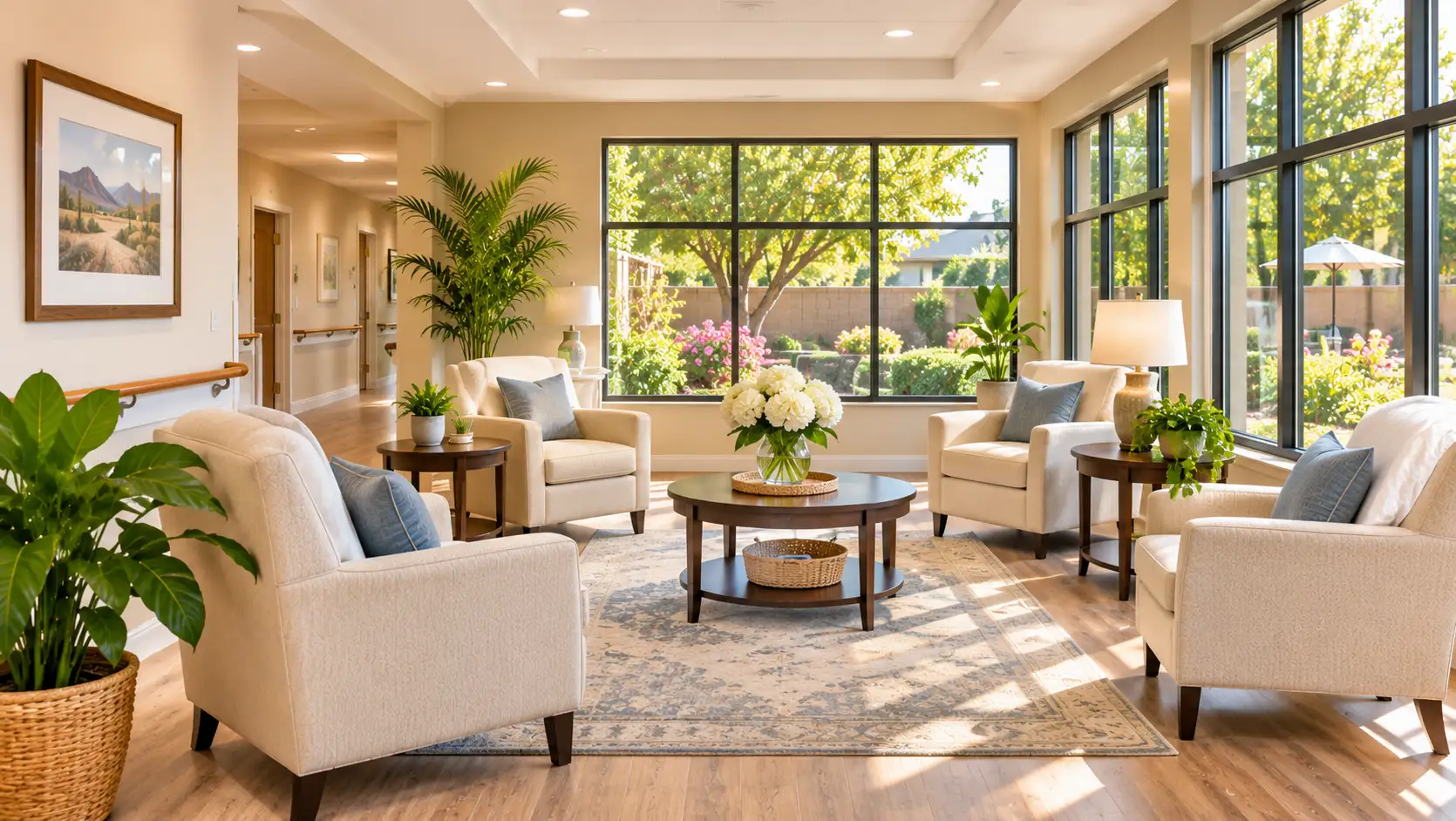
Website property photograph shown for illustration. Availability, licensed capacity and acquisition suitability are not implied.
✦ FAQ
Arizona Assisted Living Acquisition Cost FAQs
What is the average price of an Arizona 10-bed assisted living home?
This guide does not establish a verified statewide average. Request a dated analysis of comparable completed sales that distinguishes business-only purchases from transactions including real estate. Asking prices and licensed capacity alone do not establish market value.
Does a lower asking price mean better value?
Not necessarily. Compare sustainable earnings, property condition, lease terms, repair needs and total capital required. A lower price does not by itself prove either a bargain or a distressed operation.
Can I use projected earnings to justify the purchase price?
Use projections as scenarios supported by documented assumptions. Account for the time, expense and risk of achieving the forecast. Keep verified operating results separate, and confirm lender and valuation requirements.
If I own the business and property, do I have to assume rent?
There may be no third-party rent payment. Market rent can still be an analytical input when estimating the business component separately. The valuation method must treat real estate and business earnings consistently.
Is the down payment all the cash I need?
No. Include costs paid before closing, unfinanced expenses, closing adjustments and required operating liquidity. A complete sources-and-uses schedule shows the full funding need and avoids counting deposits or reserves twice.
✦ Plan your Arizona acquisition
Discuss Your Assisted Living Acquisition Budget
Share your target Arizona locations, purchase budget, funding plan, experience and timeline. If you are reviewing an opportunity, include a public listing link or general description. We can discuss next steps and the professional reviews your transaction may require.
An inquiry does not create representation, establish a value, approve financing or guarantee access to an offering. Use an agreed secure channel for sensitive records.
Continue your research
- Arizona business acquisitions and lease considerations
- Arizona buyer representation guide
- What to check before buying a 10-bed home
- Acquisition due diligence checklist
- Arizona facility licensing guide
- Arizona acquisition financing overview
Research reviewed November 22, 2026. Confirm current requirements and transaction-specific costs with the relevant agencies and qualified professionals. This guide provides general acquisition education, not a market appraisal, tax or legal advice, a financing commitment or authorization to operate a care facility.